Wordoid
2025
This holographic short film employs experimental neurotechnology, including hyperscanning, EEG, fMRI, artificial intelligence, and Neuralink, to stage a wordless conversation between multiple minds. Conceived as a digitally enabled form of telepathy, the work imagines a space before language in which humans encounter one another through direct neural connection rather than representation, bypassing verbal speech and vision. Developed in collaboration with neuroscientist Adam Horowitz of MIT, Antoine Bellemare, Philipp Thölke, and several neuroscience labs researching collective and extended mind, the project draws on biosemiotics and the concept of a “mindspace,” a multidimensional field of possible minds with distinct capacities for learning, memory, and consciousness.
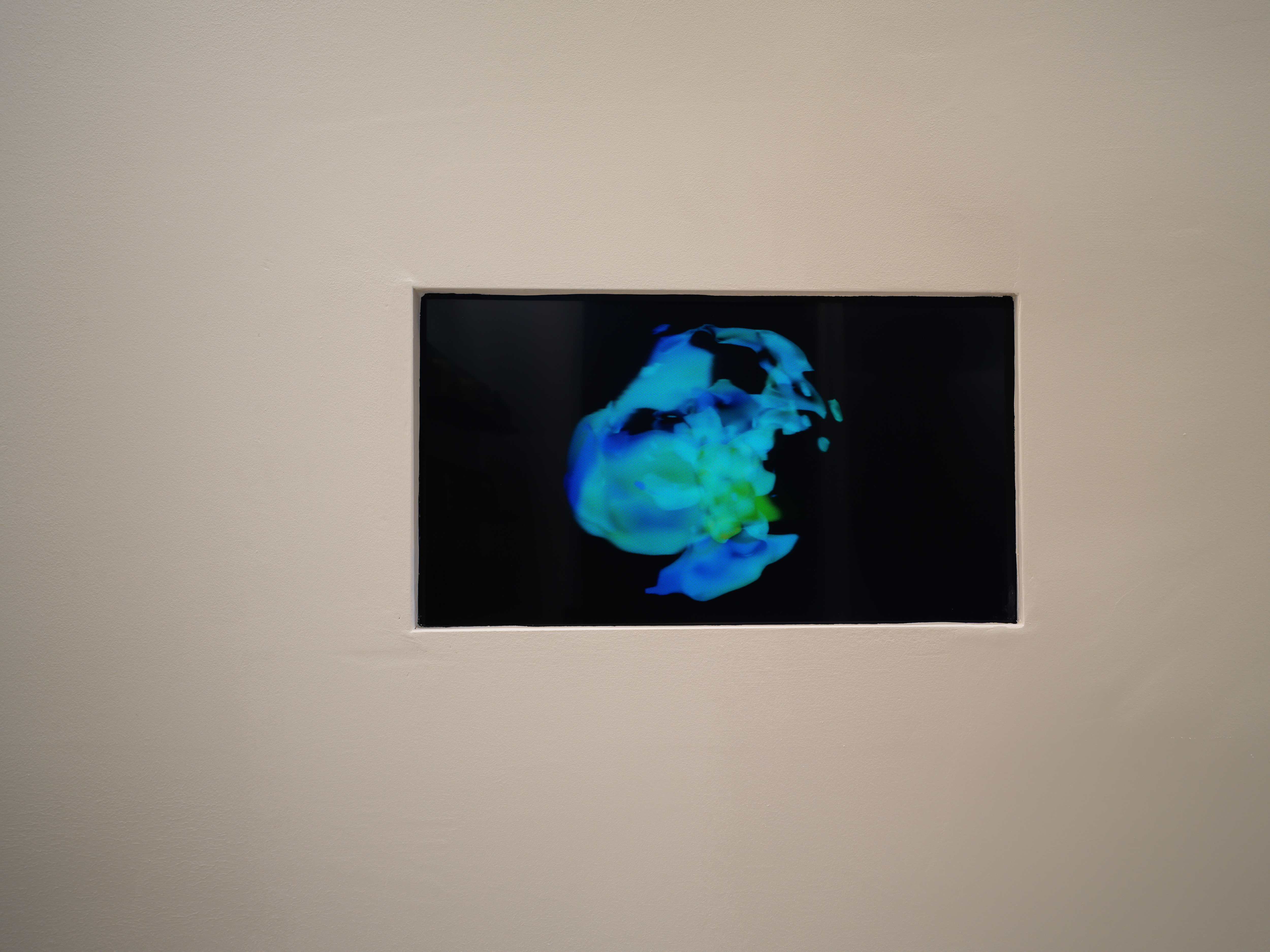
Using hyperscanning to record brain activity from several participants simultaneously, the system captures neural signals that are processed by an AI algorithm and transformed into shifting three-dimensional forms. Preverbal states such as affect, sensation, pain, joy, and the experience of color are rendered as dynamic holographic structures. Designed to draw participants into synchrony, the system creates a feedback loop in which communication unfolds as neural alignment rather than message exchange. The resulting hologram becomes a visual manifestation of multiple brains communicating through shared neural dynamics. Wordoid explores prelinguistic intelligence and speculates on future modes of nonverbal communication, asking whether it may be possible to directly experience what it is like to be another entity, and offering a glimpse into collective personhood, extended minds, and transformations of human consciousness.
Phantomatics
2026
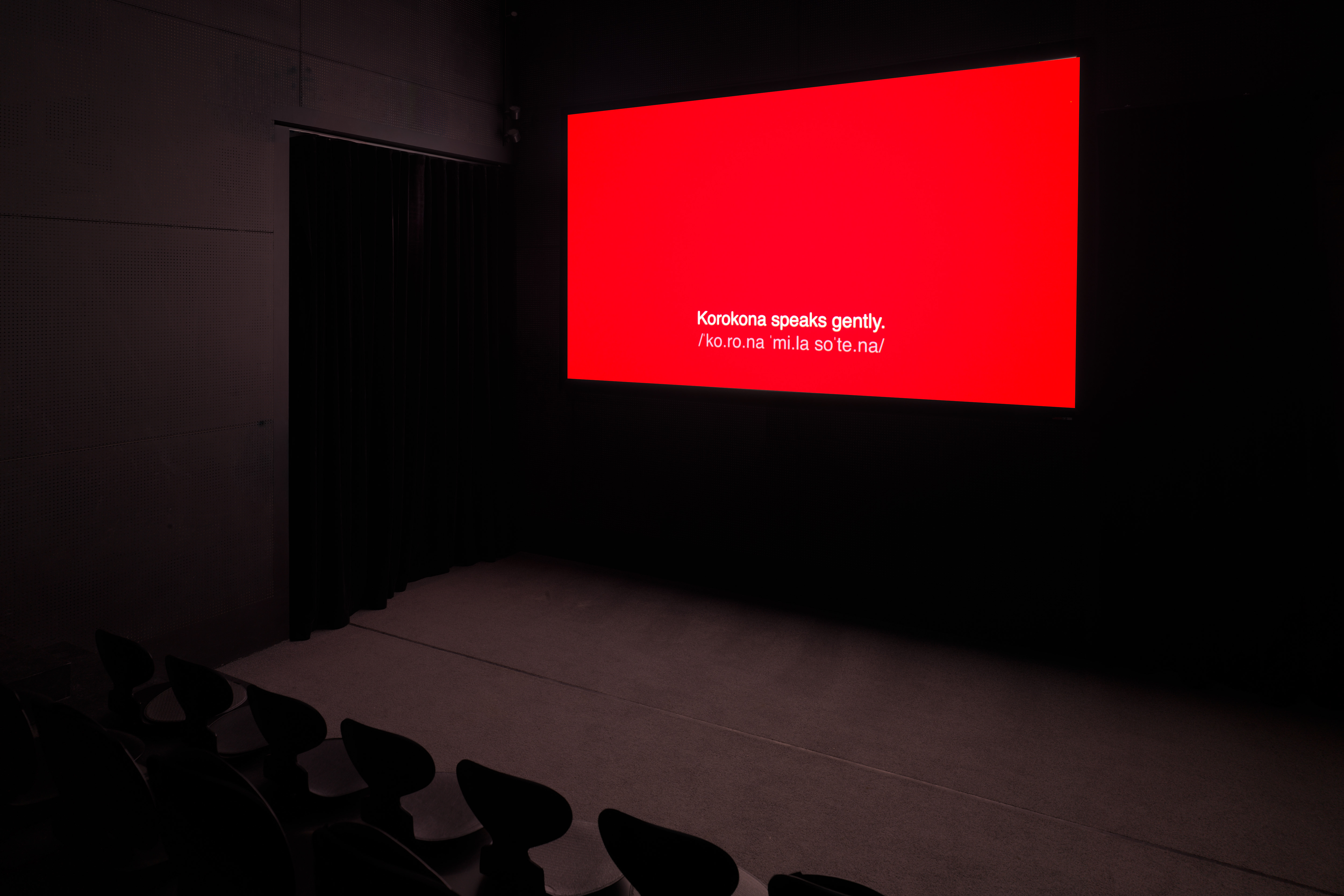
The short film Phantomatics explores the intersection of artificial languages and the “philosophical zombie” thought experiment—beings physically indistinguishable from humans yet devoid of conscious experience. Developed alongside UC Berkeley computational linguist Gašper Beguš, the work utilizes AI trained on global linguistic data to synthesize entirely new languages, each complete with its own grammar, phonetics, and assigned color. On screen, synthetic voices recite phrases from language-learning textbooks, accompanied by phonetic transcriptions and English translations. Stripped of their original context, these sentences become uncanny, mimicking a machine—or perhaps a child—struggling to speak. The title invokes Stanisław Lem’s “phantomatics,” envisioning artificial realities where self-generating languages evolve without human speakers. These synthetic entities exist in a void, lacking the social fabric essential for the birth of language or the self.